
Should You Convert Your IRA to a Roth in 2025? Here’s Why Now Might Be Your Best Shot
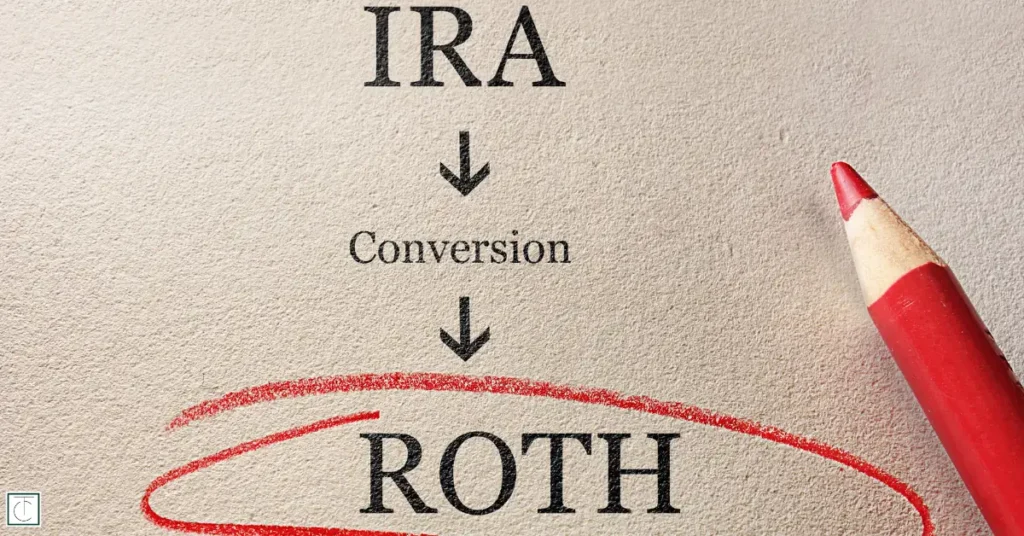
Note (May 2026): The OBBBA extended most TCJA brackets in 2025, so the original “convert before the 2026 deadline” framing in this piece is now historical. The mechanics still apply — bracket filling, IRMAA awareness, RMD reduction — and the case for strategic Roth conversions has not gone away. The post below has been updated to reflect that.
Why Roth Conversions Still Matter in 2026 and Beyond
The original urgency around Roth conversions was tied to the TCJA brackets sunsetting at the end of 2025. The OBBBA changed that — most of the lower brackets carried forward — and the conversation shifted with it. The case for strategic conversions did not disappear. It just stopped being a deadline trade and went back to being what it always should have been: a multi-year tax planning decision.
The three reasons a Roth conversion still earns its keep:
- Bracket arbitrage. Most pre-retirees have a window between leaving paid work and starting RMDs where their taxable income is temporarily low. Filling lower brackets in those years moves dollars out of future RMDs at a known cost.
- RMD reduction. Every dollar converted to Roth is a dollar that will not show up as a forced withdrawal at 73. That matters for IRMAA, for Social Security taxation, and for the surviving spouse’s bracket once they file single.
- Legacy. Roth IRAs pass to heirs income-tax-free under current rules. For families who are likely to leave money behind, that is a meaningful tax shield for the next generation.
The Core Benefits of a Roth Conversion
1. Pay Tax at a Known Bracket Now
Converting lets you pay tax at the bracket you can see today, instead of the unknown bracket you will be sitting in once Social Security, RMDs, and a possibly-different tax code are all stacked on top of each other.
2. Reduce or Eliminate Future RMDs
Unlike traditional IRAs, Roth IRAs don’t require Required Minimum Distributions (RMDs). This means more control over your retirement income and lower taxable income later.
3. Strengthen Your Estate & Legacy Plan
Roth IRAs pass to heirs income-tax-free. For families concerned about leaving behind a tax burden, this is a powerful legacy tool.
4. Tax Diversification
A mix of taxable, tax-deferred, and tax-free accounts creates flexibility to manage your tax bill year-to-year in retirement.
Smart Roth Conversion Strategies
Consider Partial Conversions
You don’t have to convert your entire IRA at once. Many retirees choose multi-year partial conversions to stay in lower tax brackets.
Use Outside Funds to Pay the Taxes
Covering the tax bill with money outside your IRA is often best. That way, you maximize the dollars that can grow tax-free inside your Roth.
Watch for Medicare IRMAA Thresholds
Large conversions can increase your Medicare premiums due to IRMAA (Income-Related Monthly Adjustment Amount). Planning the amount carefully can help avoid crossing into a higher bracket.
Coordinate With Other Income
If you plan to sell a home, start Social Security, or take large withdrawals, coordinate the timing with your Roth conversion to minimize your total tax exposure.
Tools to Plan Your Roth Conversion
- Roth IRA Conversion Calculators (Schwab, Fidelity, Voya, and others provide free online tools).
- Tax Projection Software: Your CPA or advisor can run projections based on your expected retirement income.
- Professional Guidance: A financial planner can help balance your tax savings, IRMAA exposure, and retirement cash flow needs.
Common Mistakes to Avoid
- Waiting too long. If you put off a conversion until 2026 or later, you may pay higher taxes on the same dollars.
- Converting too much at once. Overshooting into the next tax bracket or triggering IRMAA surcharges can erase the benefits.
- Skipping professional advice. Taxes, Medicare, and retirement income planning are interconnected. A coordinated plan makes all the difference.
Final Thoughts
Every household’s situation is different. For some, a multi-year Roth conversion can mean tens of thousands in lifetime tax savings. For others, the right answer is doing nothing — the bracket math just does not pencil out. Both are real outcomes.
The work is in running the numbers. Conversions that look attractive in isolation often look different once you factor in IRMAA thresholds, Social Security taxation, and the surviving-spouse bracket cliff. That full picture is where the decision actually gets made.
A Roth conversion decision touches your tax bracket, IRMAA, and Social Security taxation all at once. Run the numbers with a tax professional or use a conversion calculator from Schwab, Fidelity, or Vanguard before pulling the trigger. For more on how Roth conversions interact with Social Security claiming, read my piece on the Social Security tax trap.
This article is published by Confluence Media Group LLC, an independent publisher of educational financial content. Thomas Clark is a Series 65 Investment Advisor Representative. The information provided is for educational and informational purposes only and is not personalized financial, tax, or legal advice. Past performance does not guarantee future results. All investing involves risk, including potential loss of principal. Consult a qualified professional before making financial decisions.
Confluence Media Group LLC is a separate entity from Confluence Capital Management, the investment advisory practice through which Thomas Clark provides advisory services. Advisory services are not offered through this publishing platform.

Thomas Clark is a Series 65 licensed investment advisor and experienced trader. He specializes in investing, retirement planning, and market analysis, helping individuals build wealth and make informed financial decisions.
