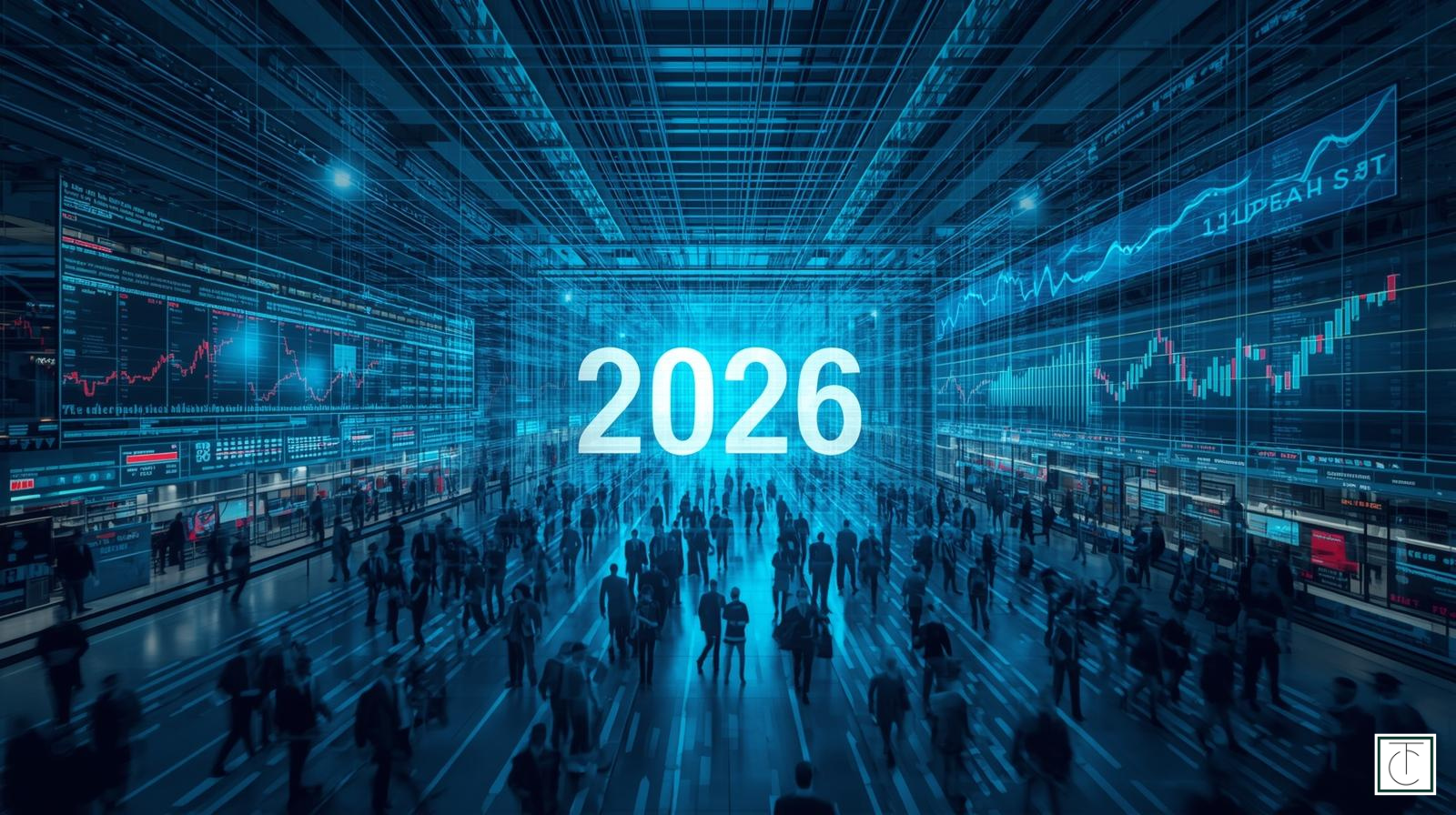
As we move through 2026, investors are navigating a market environment that feels very different from the ultra-easy money era of the 2010s. Higher-for-longer interest rates, rapid advances in artificial intelligence, and persistent geopolitical uncertainty have reshaped how smart capital is allocated.
For long-term investors and active traders alike, 2026 is less about “set it and forget it” and more about intentional positioning, risk control, and flexibility.
Let’s break down what actually matters in the 2026 market—and how to respond intelligently.
1. Interest Rates: The New Normal Has Settled In
By 2026, markets have largely accepted a reality that many investors resisted at first:
near-zero interest rates are no longer the default backdrop.
What this means in practice:
- Cash finally has a real yield again
- Bonds can generate income without extreme duration risk
- Valuations matter more than they did in the free-money era
This environment rewards investors who:
- Understand where income fits in their portfolio
- Avoid over-leveraging growth assets
- Use volatility to their advantage instead of fearing it
Key shift: Returns are now coming from structure and strategy, not just passive exposure.
2. Volatility Is No Longer an Event — It’s a Feature
In 2026, market volatility isn’t tied to a single crisis. It’s structural.
Why volatility remains elevated:
- Faster information cycles
- Algorithmic and systematic trading
- Policy uncertainty across global economies
- Concentration risk in mega-cap names
Instead of trying to avoid volatility, experienced investors are:
- Scaling into positions instead of going all-in
- Using defined-risk strategies
- Separating long-term capital from active capital
Volatility punishes emotional decisions—but rewards discipline.
3. AI Is a Productivity Revolution, Not a Straight Line Trade
Artificial intelligence remains one of the most transformative forces in markets—but by 2026, investors are more discerning.
The biggest mistake many investors make with AI themes:
- Chasing headlines instead of fundamentals
- Over-concentrating in a single narrative
- Ignoring valuation risk
Smarter positioning focuses on:
- Infrastructure and enablers
- Second-order beneficiaries
- Companies that convert AI into actual cash flow, not hype
AI is real—but selectivity matters more than excitement in 2026.
4. Portfolio Construction Matters More Than Picking Winners
One of the biggest takeaways from the 2026 environment is this:
Free Download: Social Security Optimization Guide
Learn the strategies that could maximize your lifetime Social Security benefits.
Get Your Free CopyGreat portfolios outperform great predictions.
Successful investors are thinking in terms of:
- Buckets (growth, income, protection, opportunity)
- Liquidity access
- Tax efficiency
- Risk-adjusted returns, not just raw returns
This is especially important for:
- Pre-retirees and retirees
- Business owners with variable income
- Active traders balancing capital growth and cash flow
The question is no longer “What should I buy?”
It’s “How should my capital work together?”
5. Active Strategy + Long-Term Planning Is a Powerful Combination
In 2026, the line between “investor” and “trader” is more flexible than ever.
Many high-net-worth and sophisticated investors are:
- Using active strategies to generate cash flow
- Reinvesting profits into long-term positions
- Maintaining strict risk rules on the active side
- Keeping long-term capital protected and intentional
When structured properly, this hybrid approach allows investors to:
- Stay engaged without overexposing themselves
- Adapt to changing conditions
- Reduce reliance on any single market outcome
Final Thoughts: 2026 Rewards Strategy, Not Guesswork
The markets of 2026 aren’t broken—they’re just more honest.
They reward:
- Patience over prediction
- Structure over speculation
- Discipline over emotion
Whether you’re investing for retirement, building long-term wealth, or actively trading, success in this environment comes down to clarity of strategy and consistency of execution.
If you don’t have a clear plan for how your money is working in 2026, the market will happily create one for you—usually at your expense.
Want Help Positioning Your Strategy for 2026?
If you’d like a second set of eyes on your portfolio, income strategy, or overall financial structure, I offer strategy sessions designed to help investors adapt confidently to today’s market environment.
The goal isn’t to predict the future—it’s to be prepared for it.

Thomas Clark is a Series 65 licensed investment advisor and experienced trader. He specializes in investing, retirement planning, and market analysis, helping individuals build wealth and make informed financial decisions.