
Retirement income, in plain English
The retirement decisions that actually matter — made clear.
Social Security timing, Medicare, taxes, and building a dependable income floor — explained without the jargon by Thomas Clark, a Series 65 Investment Advisor Representative who teaches this for a living.
Free guide · plain-English · unsubscribe anytime
Thomas D. Clark
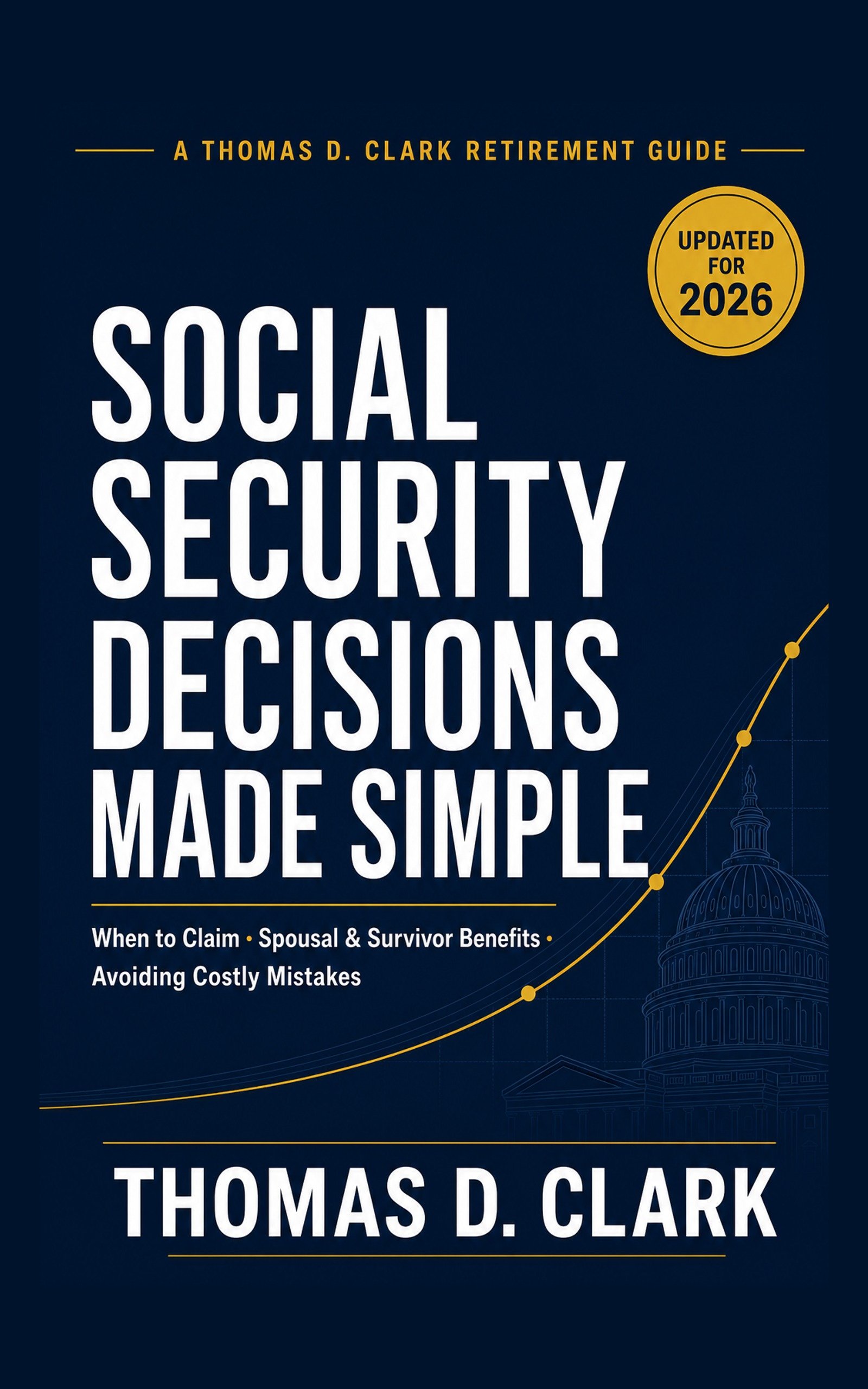
Social Security Decisions Made Simple
You get one shot at most Social Security decisions. This book helps you get them right.
Rather run your own numbers first? Try the free calculator →
Where to start
Start free. Go as deep as you want.
Four ways to get your Social Security and retirement decisions right — beginning with the free guide and the free calculator, all the way to the book and the binder.
The free Social Security guide
The claiming questions most people get wrong — answered in plain English, with the numbers that actually move the decision.
Download it free→The Social Security calculator
Run your own claiming scenarios in minutes and see what waiting — or filing early — is really worth to you.
Open the calculator→Social Security Decisions Made Simple
Every claiming decision that matters — spousal, survivor, taxes, the earnings test — in one plain-English place, with current 2026 figures.
See the book→The Just in Case Binder
The printable that lets your spouse find every account, policy, and password — without guessing — when it matters most.
See the binder→The topics
The retirement decisions, organized.
From the blog
Latest from Thomas






The framework
Now, Soon, Later — bucket planning.
The simplest way to turn a lifetime of savings into a retirement paycheck you can count on. Three buckets, three jobs.
Now
Cash and near-term living expenses — the money you don't want exposed to the market.
Soon
A guaranteed income floor from Social Security, pensions, and income-focused tools.
Later
Long-term growth, aligned with your risk tolerance and what you want to leave behind.
Free download
Start with the free Social Security guide.
Plain-English answers to the questions most people get wrong about claiming — and the numbers that actually move the decision.