Financial Strategies & Tax Planning
Tax-Loss Harvesting: When It Helps, When It Doesn’t
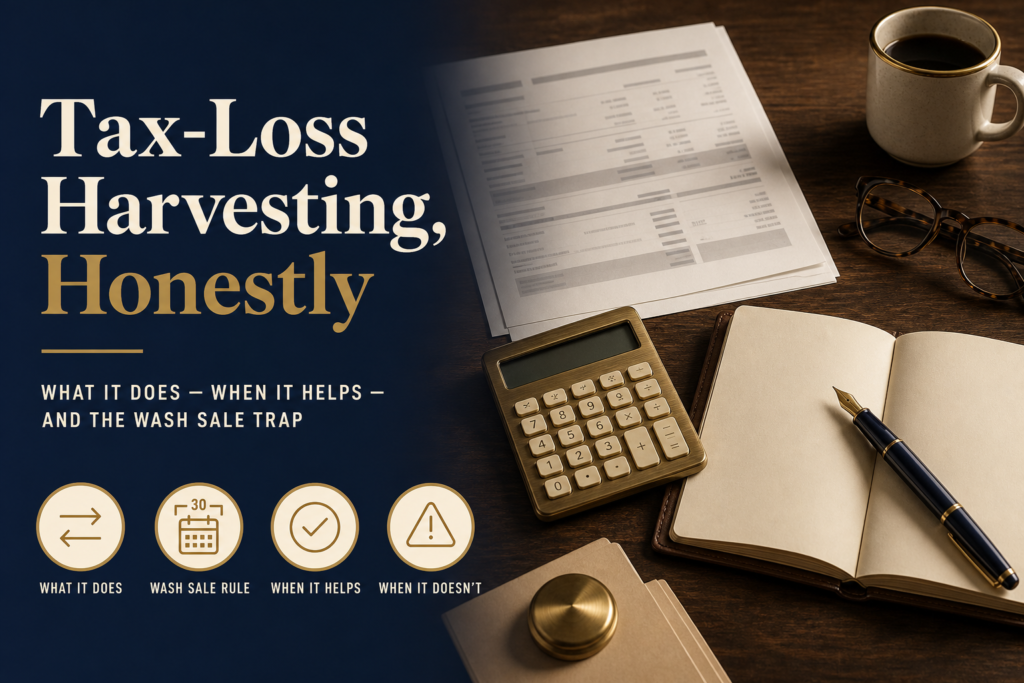
Tax-loss harvesting can lower your tax bill — or quietly cost you more than it saves. The honest version: what it actually does, when it earns…

Social Security timing, Medicare, taxes, and building a dependable income floor — from Thomas Clark, a Series 65 Investment Advisor Representative.
Tax-loss harvesting can lower your tax bill — or quietly cost you more than it saves. The honest version: what it actually does, when it earns…
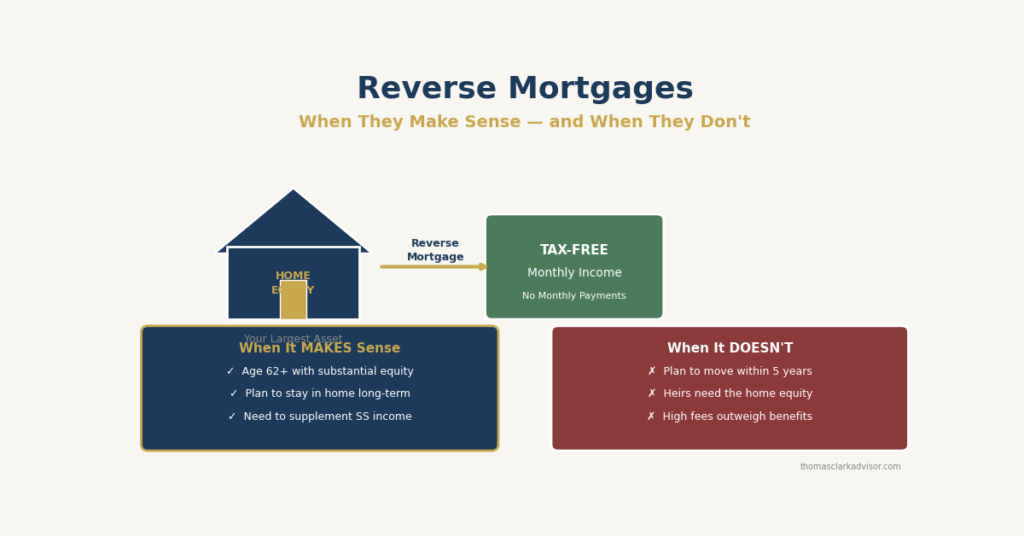
Reverse Mortgages: When They Make Sense and When They Don’t Table of Contents What Is a Reverse Mortgage (HECM)? How Reverse Mortgages Work: Your Payment Options…
Required Minimum Distributions are mechanical — the IRS calculates the number, the custodian displays it, and the penalty for missing it is automatic. None of that…
Social Security WEP and GPO: How Government Pensions Affect Your Benefits Table of Contents The Shock That Hits Public Employees at Retirement What Is the Windfall…
If you've been on SSDI for years, your benefit doesn't end at full retirement age — it converts. The check looks identical, but the rules underneath…
On April 29, four Fed members dissented for the first time since 1992. The headline is the split. The useful read is what the split is…
“Three to six months of expenses” is a heuristic from a household structure most readers no longer live in. A better question — what specific risk…
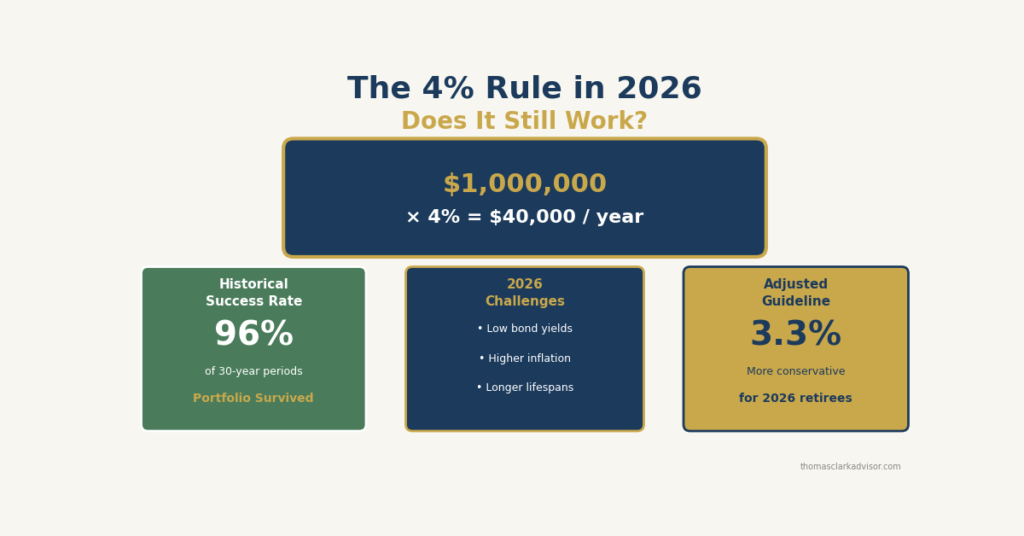
The 4% Rule in 2026: Does It Still Work? Table of Contents Where the 4% Rule Came From What the 4% Rule Actually Says — and…
Sir John Templeton called "this time is different" the four most expensive words in investing. He was usually right — but not always. Here is the…
Asset allocation gets all the attention. But where you hold each asset class — pre-tax, Roth, or taxable — can change your after-tax retirement income by…