
Account Ordering in Retirement: Which Accounts to Drain First (and Why)
The textbook rule is taxable, then traditional, then Roth. For most retirees with all three account types, following that rule blindly leaves $50,000 to $200,000 on…


Most retirement plans size the income bucket by guessing a portfolio percentage. The right way is to start with essential expenses, subtract guaranteed income, and let…
The 4% rule is a research finding asked to do a job it wasn't designed for. It's a useful sanity check, not a personal retirement plan.…
Picture a hypothetical retired couple with $3.2 million in retirement savings. Nearly $900,000 of it is sitting in money market funds and savings accounts. They sleep…
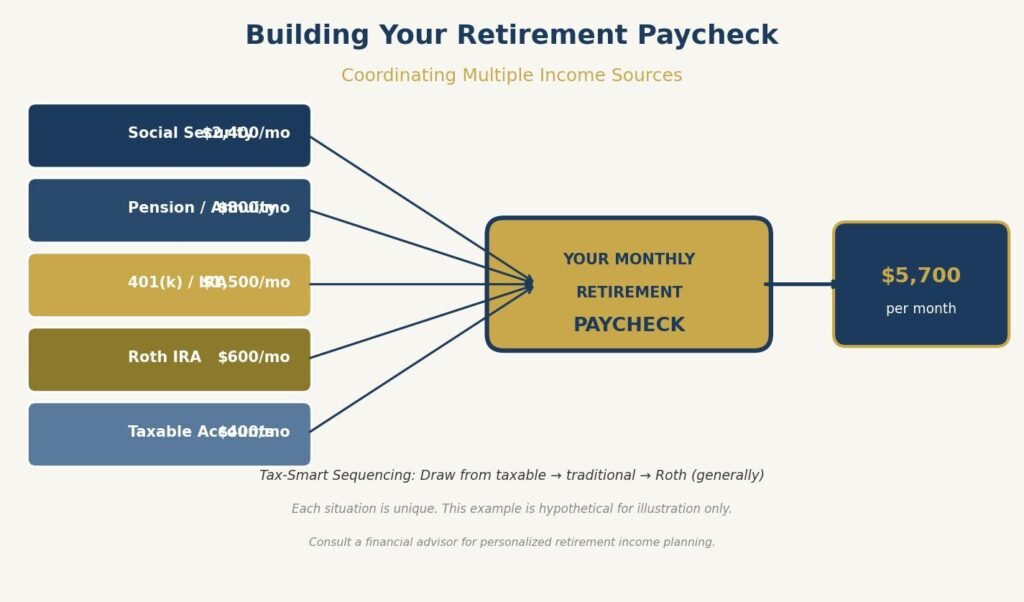
Retirement isn't about having enough money — it's about turning a pile of accounts into something that behaves like a paycheck. The system that makes the…
The biggest fear in retirement isn't running out of money — it's the bad year that comes early. Bucket planning structures the money so a market…
Key Takeaways Your income floor is the guaranteed income that covers essential expenses — housing, food, healthcare, utilities, and insurance — regardless of what the stock…
Retiring into a down market can feel like a financial emergency. This hypothetical case study reveals the three strategies that helped one couple recover.
Annuities in Retirement: When They Help and When They Hurt Few words in financial planning stir up more debate than “annuity.” Some advisors swear by them…
The biggest shift in retirement is not financial — it is psychological. Your retirement paycheck strategy — how you coordinate multiple income sources into a reliable…